
Who’s Got Something To Say? The Future of Hip-Hop
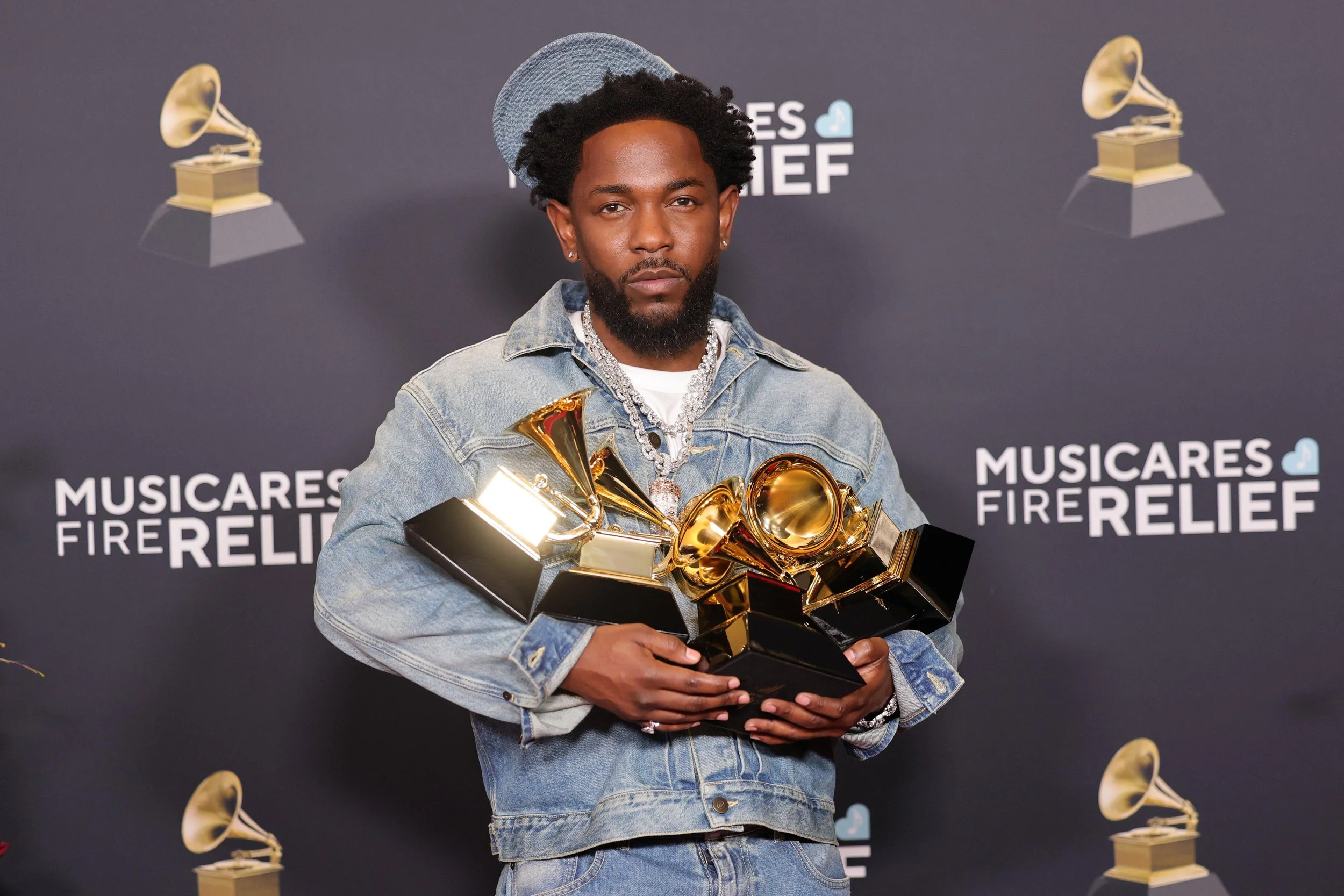
Kendrick Lamar has ruled the Grammy Awards in 2025 and 2026. © Monica Schipper/Getty Images for The Recording Academy
Kaleidiscope is back from its hibernation period following a busy festive season and hectic start to the New Year. However, inactivity on the blog did not mean that I wasn’t following any music discourse and there is one particular post on X (yes, I’m sorry for still frequenting the platform) by user @tremusa1999 that ended up on my timeline, and it got me thinking. The post claims that “2020s era Hip-Hop is so weird in the sense of new rappers taking over, there’s not a single new rapper that has made that kind of impact and we’re more than halfway through the decade” – and it’s hard to disagree.
2020s era Hip-Hop is so weird in the sense of new rappers taking over, there’s not a single new rapper that has made that kind of impact and we’re more than half way through the decade
— Tre D. Musa ☀️✊🏽 (@tremusa1999) January 24, 2026
While hip-hop’s cultural relevance continues to increase (according to the Gen Z Audio Report, hip-hop/rap is the most listened to genre among Gen Z Americans), the big players in the culture (Kendrick Lamar, Drake, Nas to name a few) are millennials or older. They are responsible for the big stories – the beef and diss tracks exchanged by Kendrick and Drake being a clear example – but they are also the ones bringing out the most interesting and critically acclaimed music in the hip-hop scene. Kendrick’s 2024 album GNX just claimed the Grammy Award for the Best Rap Album with Clipse’s Let God Sort Em Out being another critic’s favourite. Nas’ late-career output has garnered widespread acclaim leading to a Grammy’s nod for Best Rap Album in 2021 for King’s Disease. His label Mass Appeal Records has focused on platforming hip-hop legends like De La Soul and Wu Tang members. J Cole’s new album The Fall-Off is arguably 2026’s most highly anticipated drop along with A$AP Rocky’s comeback record Don’t Be Dumb (which came out on January 16th). All these rappers rose to prominence in the 1990s, 2000s and early 2010s. So, as we kick off the second half of the 2020s, I ask myself: where is the next generation? How have we got here? And what does the future of hip-hop look like?
As with any attempt at explaining a 2020s phenomenon, the pandemic obviously cannot be ignored as a key factor as it took away two formative years performing in front of live audiences for any rapper getting started around 2020. But I think blaming the pandemic is too simple, especially when considering that multiple big rappers dropped exciting new music from 2020 to 2022. It is also clear that the pandemic did little to prevent artists’ careers from exploding as was showcased by Dua Lipa’s meteoric rise after the release of Future Nostalgia or Taylor Swift’s career reignition on 2020 albums Folklore and Evermore.
The problem isn’t so much that new hip-hop music by younger artists is lacking quality (JID’s 2025 album God Does Like Ugly was an impressive addition to his catalogue, Saba’s collaboration with No I.D. found its way into my top 10 albums of 2025 whilst Little Simz continued to carry the flame for UK hip-hop with her album Lotus), it’s that the cultural impact of their music is minuscule. This is particularly true for artists like Lil Baby whose music racks up millions of streams, but whose output is in my opinion mostly uninspired, repetitive and dull – despite the lively trap beats. Lil Baby’s 2025 album WHAM reached number one on the Billboard 200 upon its release, yet it sparked no conversation, did not cross over to popular music and vanished soon after, its cultural staying power seemingly restricted to background music in professional athletes’ changing rooms. The restricted mainstream appeal of this type of rap music does not bother me. But I am worried that the more interesting acts, like those mentioned, are struggling to even reach that level of exposure.
There is one obvious and somewhat sad explanation that can’t be overlooked. The hip-hop community has suffered some tragic losses in the last 10 years. Emo-rap prodigy Juice WRLD passed away shortly after the release of his second album in 2019, New York drill pioneer Pop Smoke was killed before his first album came out posthumously in 2020 and XXXTentacion died in 2018. All three could have feasibly been among the drivers of hip-hop culture in the 2020s.
Perhaps partly due to losing some of the most talented young rappers coming up in the late 2010s the genre has lost some of the momentum it gained in the 2010s that makes it the most popular genre among Gen Z today. I would add that hip-hop’s development has grown stale with the end of the trap era and the lack of innovative styles to replace it. That means that a LOT of the hip-hop music coming out sounds like something we have heard a million times before – trap beats with booming 808 drums, monotonous flows, somewhat shallow raps about women, drugs and the like. In the meantime, we have the tried and tested veterans of the rap game – particularly Kendrick and Cole – whose output continues to impress and cross over into the cultural mainstream but no new artists whose work is translating into this kind of impact.
The inertia of the hip-hop ecosystem has made returning to the roots (or in some cases outright nostalgia-baiting) a promising avenue for older artists. At the end of 2025, Nas released his latest album – Light-Years – a collaboration with DJ Premier that was clearly intended to harken back to their iconic work in the 1990s. I would not call Nas’ output nostalgia-baiting, but hip-hop is certainly not spared from this trend of feeding into people’s rose-tinted perceptions of the past. Needless to say, this is not an ideal environment for fresh voices to emerge, and they have struggled to do so as a result. Obviously, there is still innovation in the underground scene, but it is perfectly feasible that what happened to rock music in the 2010s – diminishing cultural relevance and a lack of impactful new talent – will happen to hip-hop in the 2020s with a few torchbearers of the “good ol’ times” keeping hip-hop’s flame alight.
The elephant in the room in all of this are the changing consumption patterns in the streaming era and what it entails: algorithmic content selection, oversaturation and a lack of cultural gatekeepers to make sense of this changed landscape. Hip-hop is not the only genre to suffer from this but since the barrier of entry to hip-hop is by far the lowest of any mainstream genre, the difficulty of sifting through the abundance of new music and artists is particularly pronounced. While I like to think of myself as someone who is on the ball when it comes to hip-hop, I must admit that I am struggling to keep up. So, to get back to the question I asked at the beginning of this post… I don’t know where the next generation is nor do I even know who represents this generation. And it would be hypocritical of me to make a sweeping claim where hip-hop is headed in the future. But perhaps this uncertainty is what defines the current era in hip-hop and popular music more generally. All we can do as listeners is to remain curious and openminded. In the meantime, all I want to do is sit back and enjoy J Cole’s new record.